









Why I'm Building It
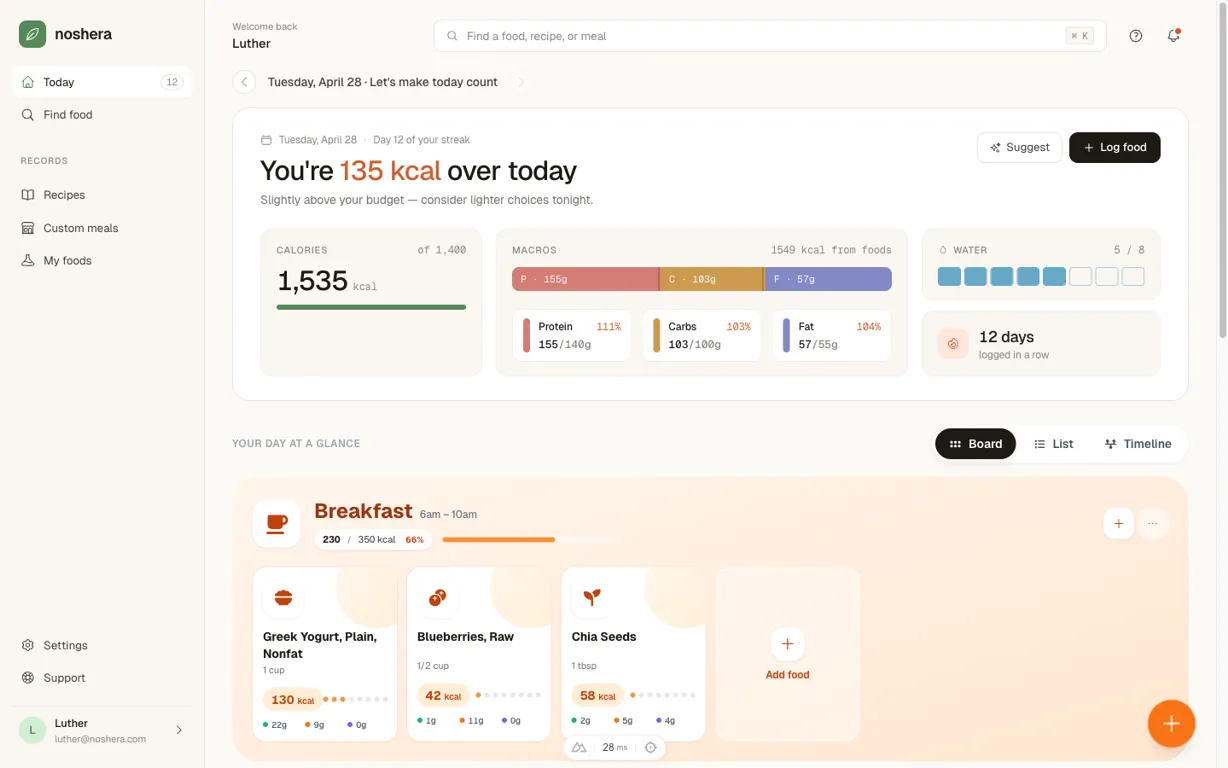
I've been logging every meal in a food tracker for months — it's a big part of how I turned my health numbers around. But living inside these apps daily makes their rough edges impossible to ignore. Noshera is my answer: a consumer-first nutrition diary where you log food, track calories, macros, weight, and water, and build recipes — with a practitioner layer planned on top so coaches and dietitians can get visibility into their clients' logs.
That lived experience drives the design. Real life doesn't fit neatly into breakfast/lunch/dinner, so meal types are user-defined. Sometimes you just know you ate about 1,400 calories at a sushi buffet, so there's a quick log that takes a description and a number without forcing you to fake a food entry. Late-night snacks can be logged to yesterday, because the day you lived doesn't always end at midnight.
How It Works
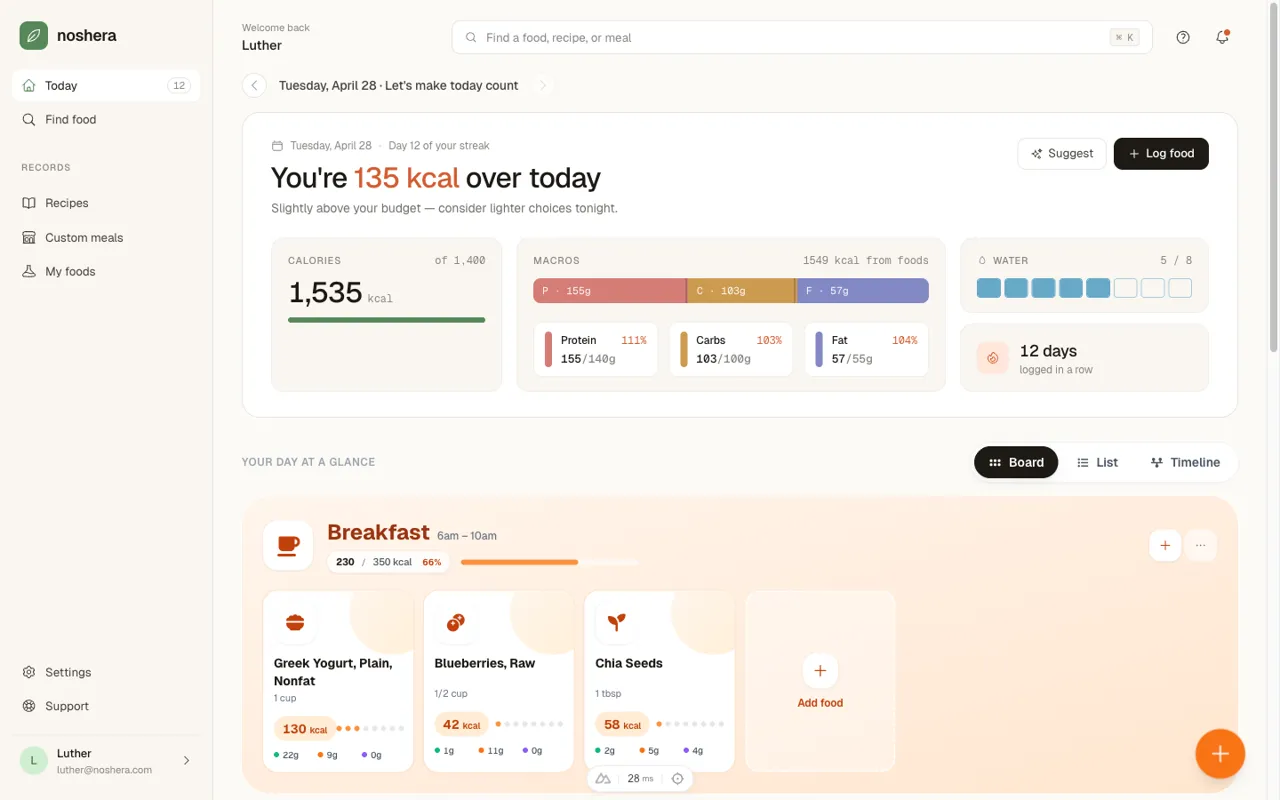
The stack is Nuxt 4 and Vue 3 with Tailwind for the UI and Pinia for state, backed by Supabase — Postgres with row-level security on every table, plus Supabase Auth. The whole thing deploys to Cloudflare Pages.
The data model was the most interesting part. Food lives in three tiers: a public database (USDA and Open Food Facts), each user's private custom foods, and a restaurant database. Nutrition is stored per 100g as a calculation base, and every diary entry snapshots its nutrition at log time — so if a food's data changes later, your history stays accurate. Recipes and custom meals are deliberately separate concepts: a recipe creates a food from raw ingredients, while a custom meal assembles a plate from things that already exist.
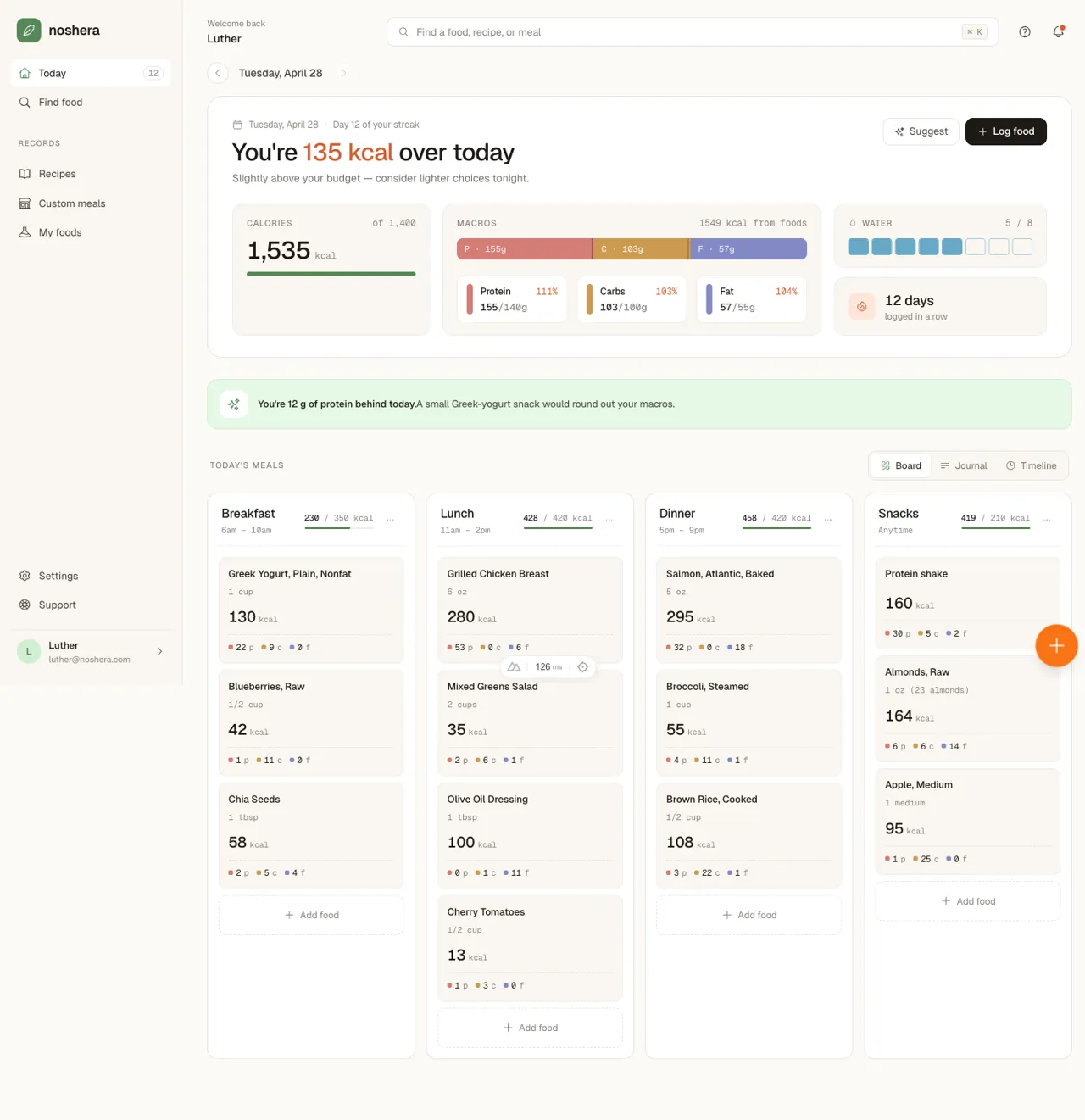
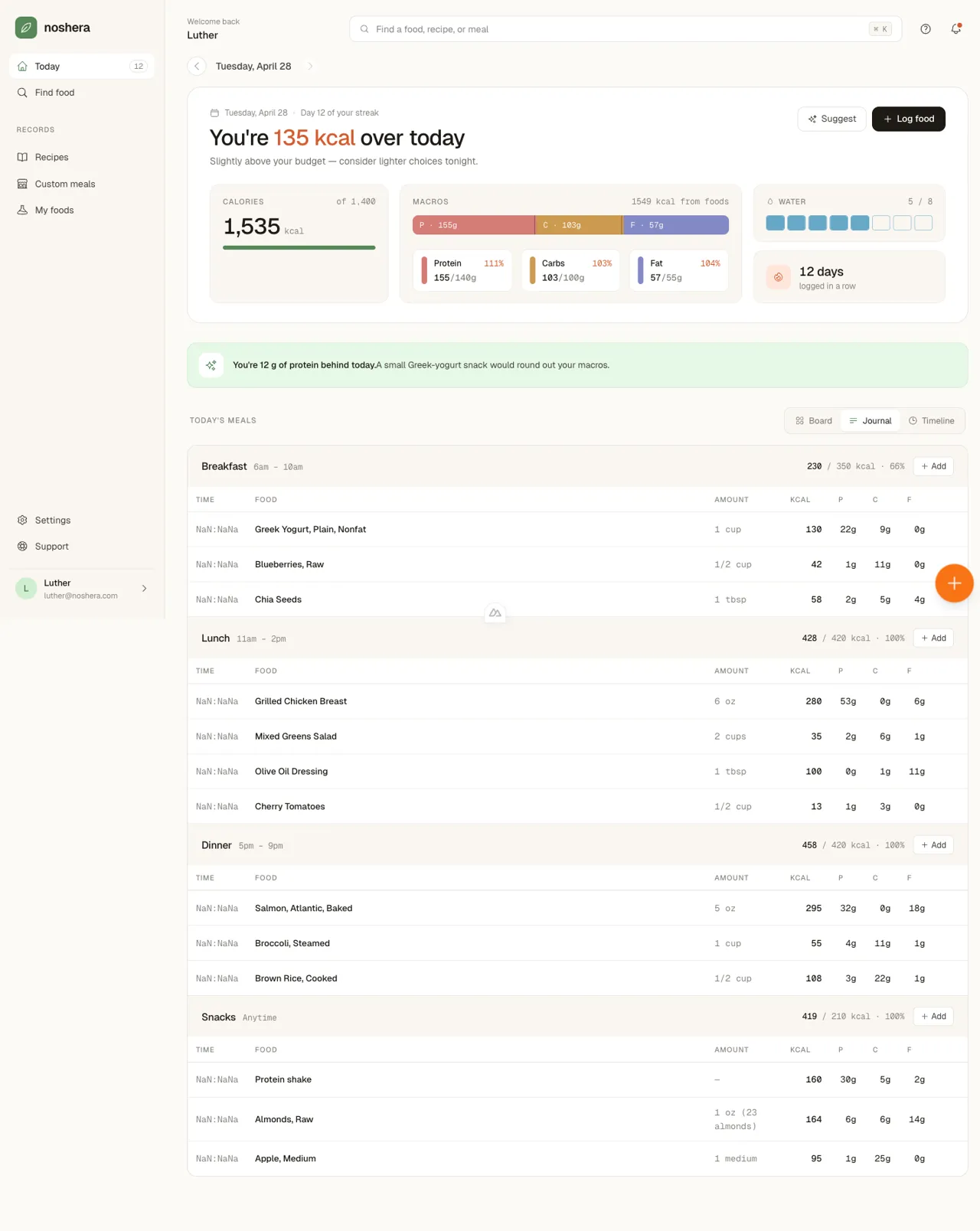
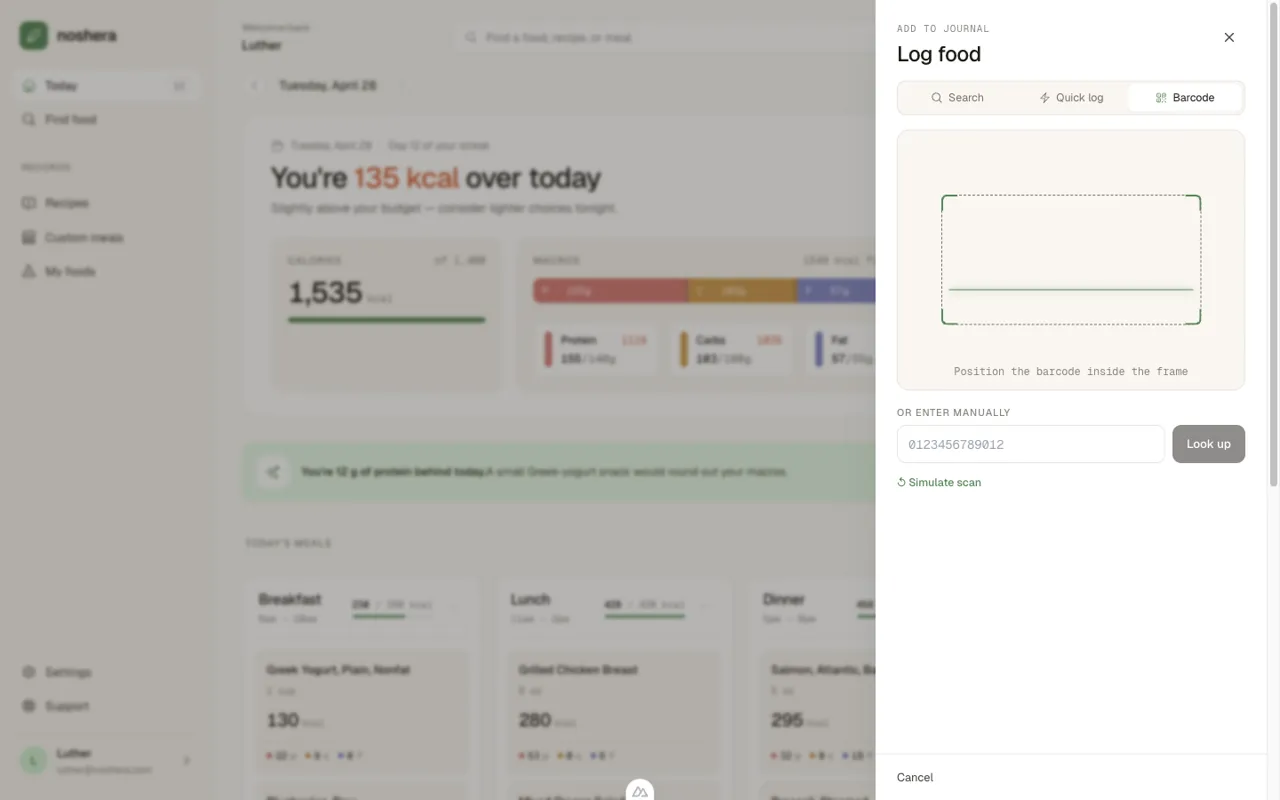
Logging happens in a drawer with three modes: search, quick log, and barcode scanning — with a community contribution pipeline planned for products the database doesn't know yet.
What's Next
Noshera is live at noshera.com and under active development. On the roadmap: the practitioner dashboard for coaches and dietitians, an MCP server so AI agents can log and query on your behalf (the API is meant to be a first-class client, not an afterthought), and a mobile app. I use it as my own daily tracker, which is the best bug reporter I've ever had.